Quick summary
To see how people use Reddit to learn about scams, researchers analyzed 1,525 posts and 1,883 comments across four scam-focused Reddit communities, mostly /r/Scams and /r/Sextortion.
Their main finding is that Reddit acts like a giant, informal public help desk: people post suspicious messages, other users explain the likely scam,
and many replies focus on reassurance and “what to do next.”
The paper also finds that while communities often help victims, some comments can slip into victim-blaming or harsh judgment. The authors conclude that these communities are a valuable resource for scam prevention and remediation, but they also highlight gaps in formal support and the ongoing difficulty people have distinguishing legitimate messages from scams.
Key findings and stats (no hype, just what the paper reports)
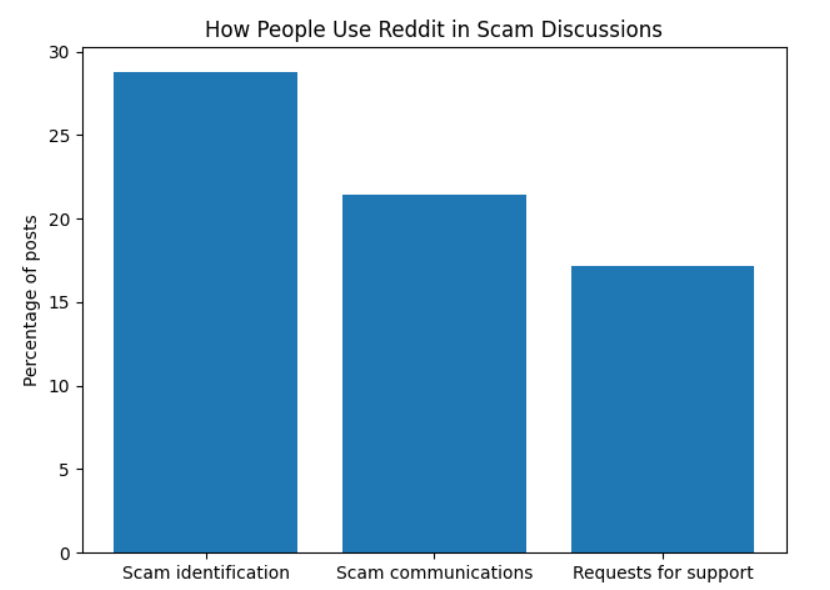
What people post: About 28.8% of posts were “scam identification” (people asking if something is a scam). About 21.4% were discussions of scam communications (warnings, examples, “how this works”). About 17.2% were requests for support beyond identification (help after victimization, coping, next steps).
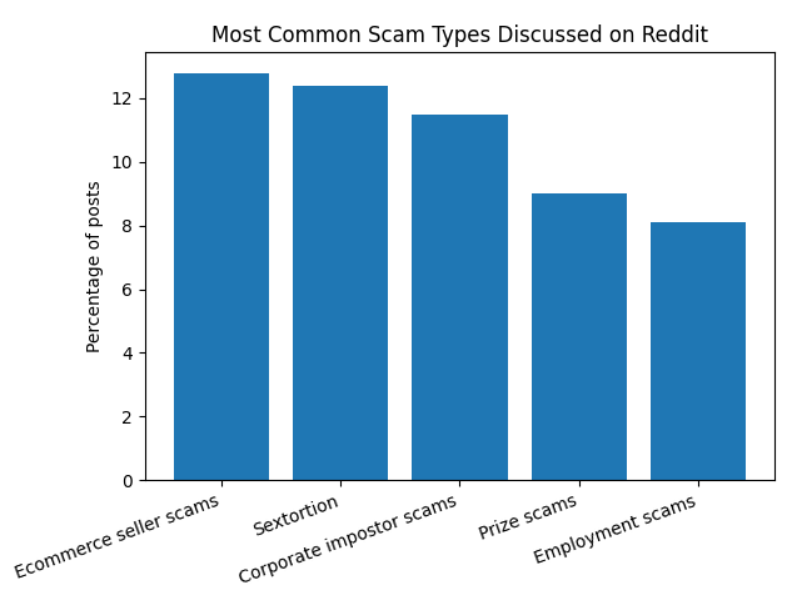
The most common scam types discussed (among posts that discussed scams): ecommerce seller scams were 12.8%, sextortion was 12.4%, and corporate impostor scams (fake banks, delivery services, brand impersonation) were 11.5%. Prize scams (9.0%) and employment scams (8.1%) also showed up frequently.
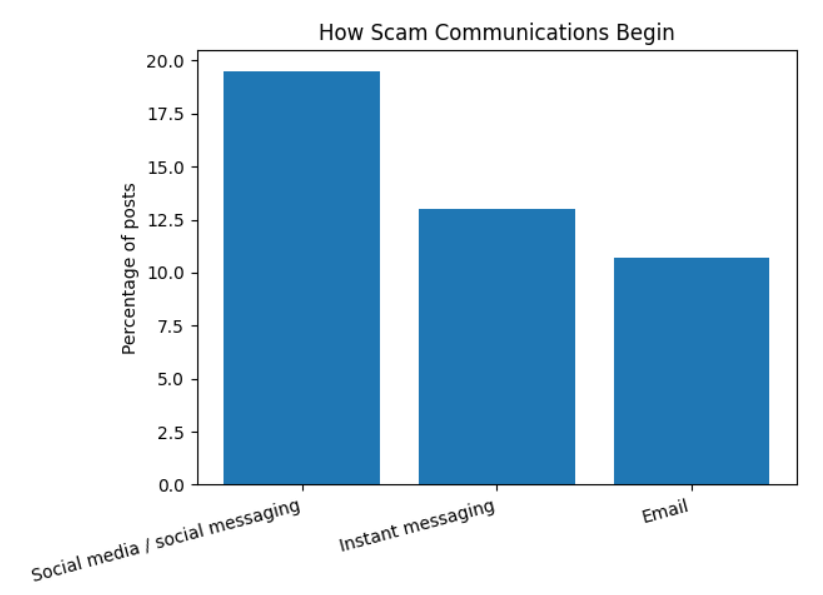
How scams begin: The most common initial communication channels included social media/social messaging (19.5%), instant messaging (13.0%), and email (10.7%), though many posts didn’t clearly specify the channel.
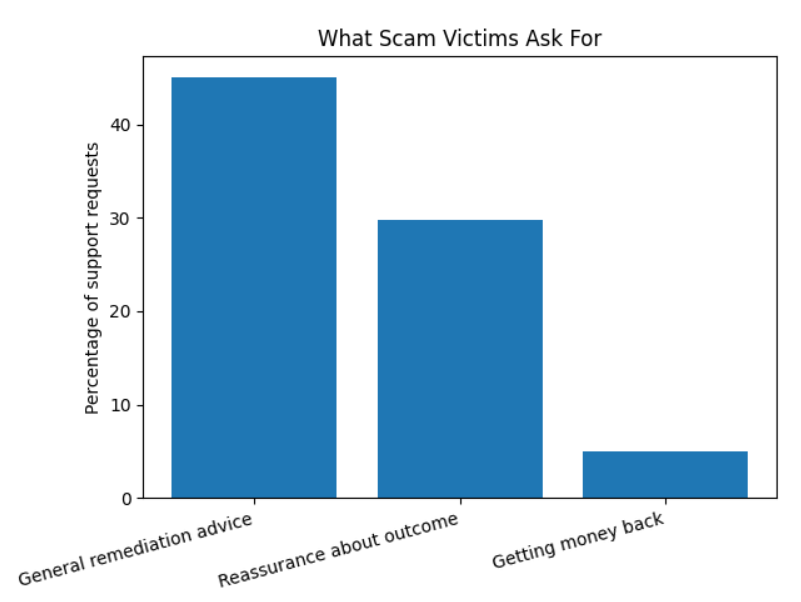
What victims ask for: In requests for support, the most common ask was general remediation advice (45.0%) and reassurance about the scam’s likely outcome (29.8%). Explicit questions about getting money back were relatively rare (5.0%), even though many victims described financial harm.
What advice people give: Comments most often explain the scam and provide reassurance. The most common practical guidance is non-technical: block or ignore the scammer, don’t pay, contact the bank/payment processor, and report to the platform. Technical guidance (privacy settings, account changes, MFA) appears less often and usually in specific contexts like sextortion.
A notable feature: bots (AutoModerator) played a real role in delivering standardized explanations and warnings, especially on /r/Scams and /r/Sextortion.
Community tone: /r/Sextortion tended to be more emotionally supportive; /r/Scams had more instances of chastising or victim-blaming style replies.
Why this matters for senior citizens in America
First, there’s an access mismatch. Reddit’s user base skews younger, while many high-impact scams in the U.S. disproportionately affect older adults. The paper shows Reddit can be a useful “early warning system” and support hub, but seniors are less likely to be on Reddit, which means they may not benefit from the strongest crowd-sourced explanations.
Second, the research highlights that scam harm is emotional, not only financial. Many victims want reassurance and clarity: “Am I safe?” “Can they hurt me again?” Seniors often experience strong fear, embarrassment, or shame after scams and may be even less likely to report incidents to formal channels. The paper’s emphasis on reassurance as a core need suggests that senior-facing support should explicitly address fear and confusion, not just provide checklists.
Third, the paper calls attention to re-victimization risk. The authors describe “recovery scams” that target people who publicly admit they were scammed, offering fake services to recover money or fix the situation. Seniors who reach out for help online or respond to unsolicited “helpers” can be especially vulnerable to this second wave of exploitation.
Fourth, the findings suggest what effective senior-friendly tools should look like. The authors argue that automated tools could help people reason about scams. For seniors, the winning design is likely conversational, calm, and non-judgmental. It should provide an explanation of why a message is suspicious, offer simple next steps, and include reassurance where appropriate. This is also a strong use-case for voice-based help (phone or smart speaker), not just web forums.
Finally, there’s a public outreach angle. The paper suggests greater engagement by government entities and law enforcement in online spaces where victims ask for help, and clearer guidance about where to report scams. For seniors, “meeting people where they are” often means phone, text, email, and bank channels—so trusted, readable guidance needs to appear inside those workflows, not only on a separate website.
Practical takeaway for families and caregivers
If you’re helping an older parent or neighbor, the paper supports a simple approach: treat scam prevention as both an information problem and an anxiety problem. The best help is a calm explanation of what’s happening, clear next steps (stop contact, call the real institution using a known number, secure accounts), and reassurance that they’re not alone and not “stupid.” Shame is a scammer’s ally.
It also supports a hard rule: be extremely skeptical of anyone who contacts a victim offering “recovery” services, “ethical hacking,” or guaranteed refunds. Those are often follow-on scams.
Source and context
This explainer is based on the open-access research paper: “Is this a scam?”: The Nature and Quality of Reddit Discussion about Scams (CCS ’25). The study uses thematic analysis of scam-related Reddit posts and comments and reports descriptive statistics about post types, scam categories, and support behaviors.