
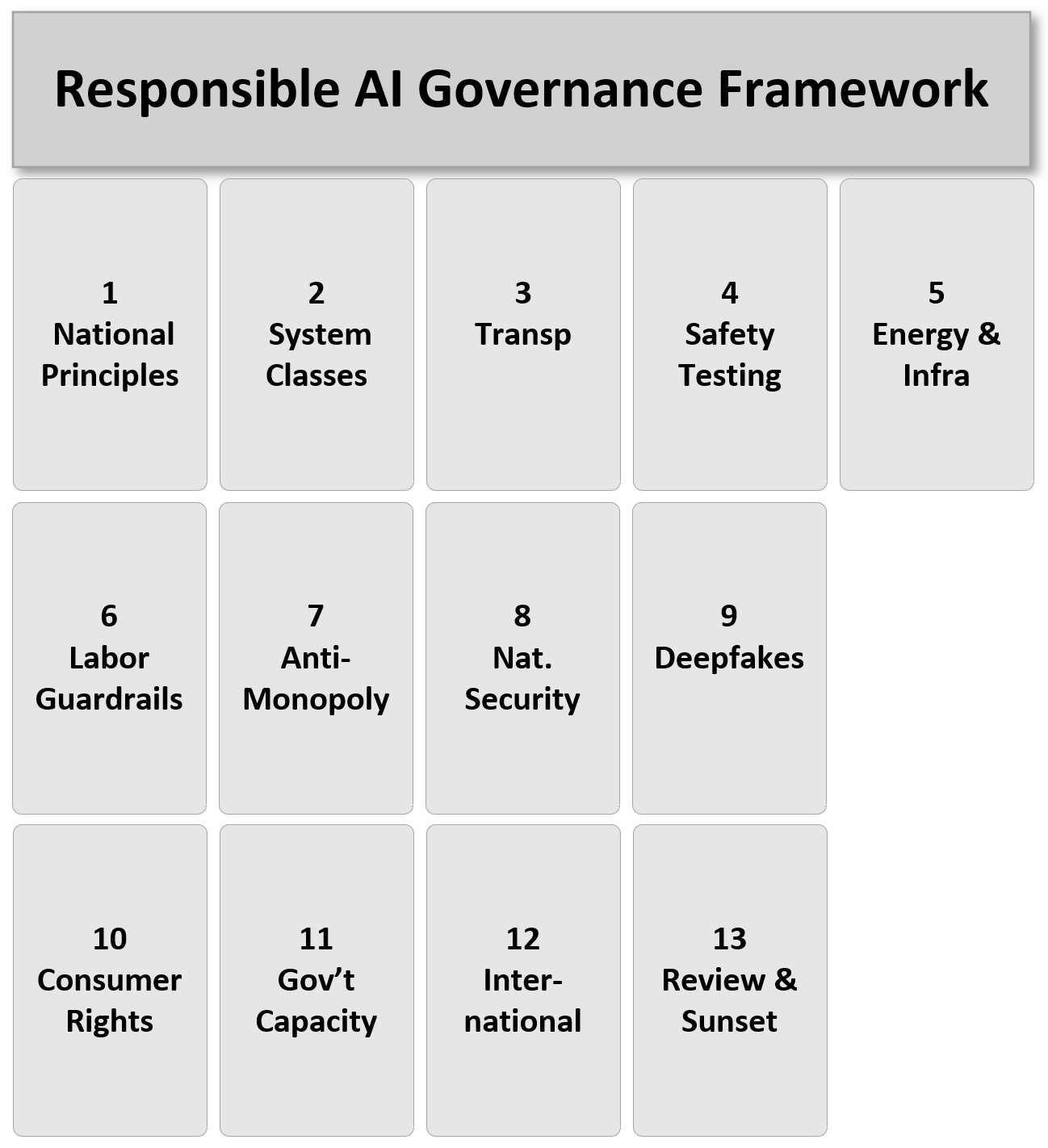
Figure 1. Responsible AI Governance Framework structured around thirteen pillars.
This is a draft outline of a responsible AI governance framework organized into thirteen pillars. This is a working document for discussion, not a finalized structure.
Figure 1. Responsible AI Governance Framework structured around thirteen pillars.
Define what the country is trying to achieve with AI, and the values that should guide every downstream rule and decision.
Define risk-based system classes (general, elevated, critical, sensitive).
Minimum disclosure practices around training sources, model architecture, system design.
Standardized safety evaluations before wide deployment; post-deployment monitoring.
Energy disclosures, efficiency standards, and infrastructure resilience for large-scale AI systems.
Worker protection where AI impacts conditions, job displacement, and long-term career paths.
Prevent excessive concentration of compute, data, and model power in a few entities.
Standards and oversight for defense, intelligence, and critical-risk AI applications.
Requirements for watermarking, detection, labeling, and political integrity protections.
Privacy rights, misuse protections, redress pathways, transparency during AI interactions.
Funding, staffing, independent scientific bodies, red-team capacity, compute oversight.
Alignment with allies, global standards, cross-border model governance, export controls.
Automatic updates, periodic evaluation, sunset clauses, and iterative evolution of rules.